75 episodes, biweekly, for over three years. I built the system that lets me ship a full episode solo in about half a workday.
My Role
Solo owner of production, distribution, and the visual system behind the show, inside a four-person team. I designed the brand, and I run the machine that turns every interview into a finished, on-brand, fully distributed episode.
Overview
SaaS Scaled is the podcast of Arman Eshraghi, CEO of Qrvey. Its job is business development: widening his professional network among leaders and CEOs in the SaaS and tech sector. I own the guest intake flow, the editing, the full suite of promo assets for every episode, publishing to every platform, and the website. I also designed the show's visual identity. It's the work of a content team, run by one person, reliably, every two weeks.
Results
75
Episodes produced solo, biweekly, over 3+ years
69%
Of the audience is in the US, the exact market the show exists to build reach in
7+
Distinct assets produced per episode, on brand, every two weeks


Overview
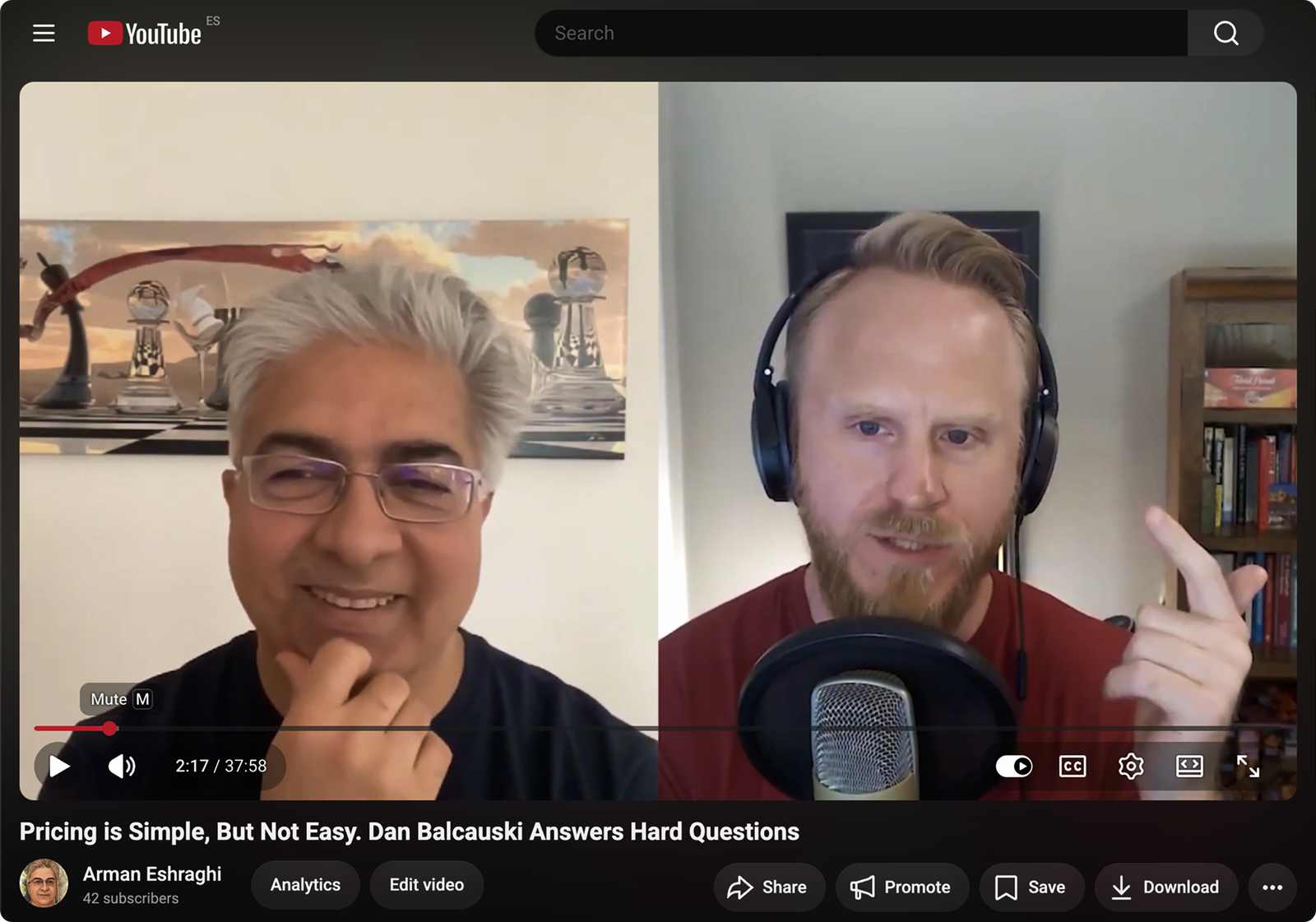
SaaS Scaled is the podcast of Arman Eshraghi, CEO of Qrvey. Its job is business development: widening his professional network among leaders and CEOs in the SaaS and tech sector. Guests are founders and executives who come on to talk about their companies and share experience, points of view, and takes on the industry. I own everything that turns each of those conversations into a polished, distributed, on-brand product, reliably enough that the show keeps doing its job without anyone having to think about the machinery.
That machinery, run by one person, is the case.
By the numbers
75
Episodes produced solo, biweekly, over 3+ years
7+
Assets produced per episode, on brand, every two weeks
~7,800
Downloads to date, show all-time
69%
Of the audience is in the US (Apple Podcasts 46%, Spotify 20%)
~12,700
YouTube views across the cuts I produce
01 — What It Actually Is
It would be easy to file this under "video editing." It isn't. SaaS Scaled exists to do one job: grow the CEO's network. My role is to own everything that turns each conversation into a polished, distributed, on-brand product, reliably enough that the show keeps doing its job without anyone having to think about the machinery.
02 — The Pipeline I Own
It's a small team: Britta books the guests, Arman hosts the interviews, Megan turns each interview into written content, and I run production from end to end. What that covers, stage by stage:
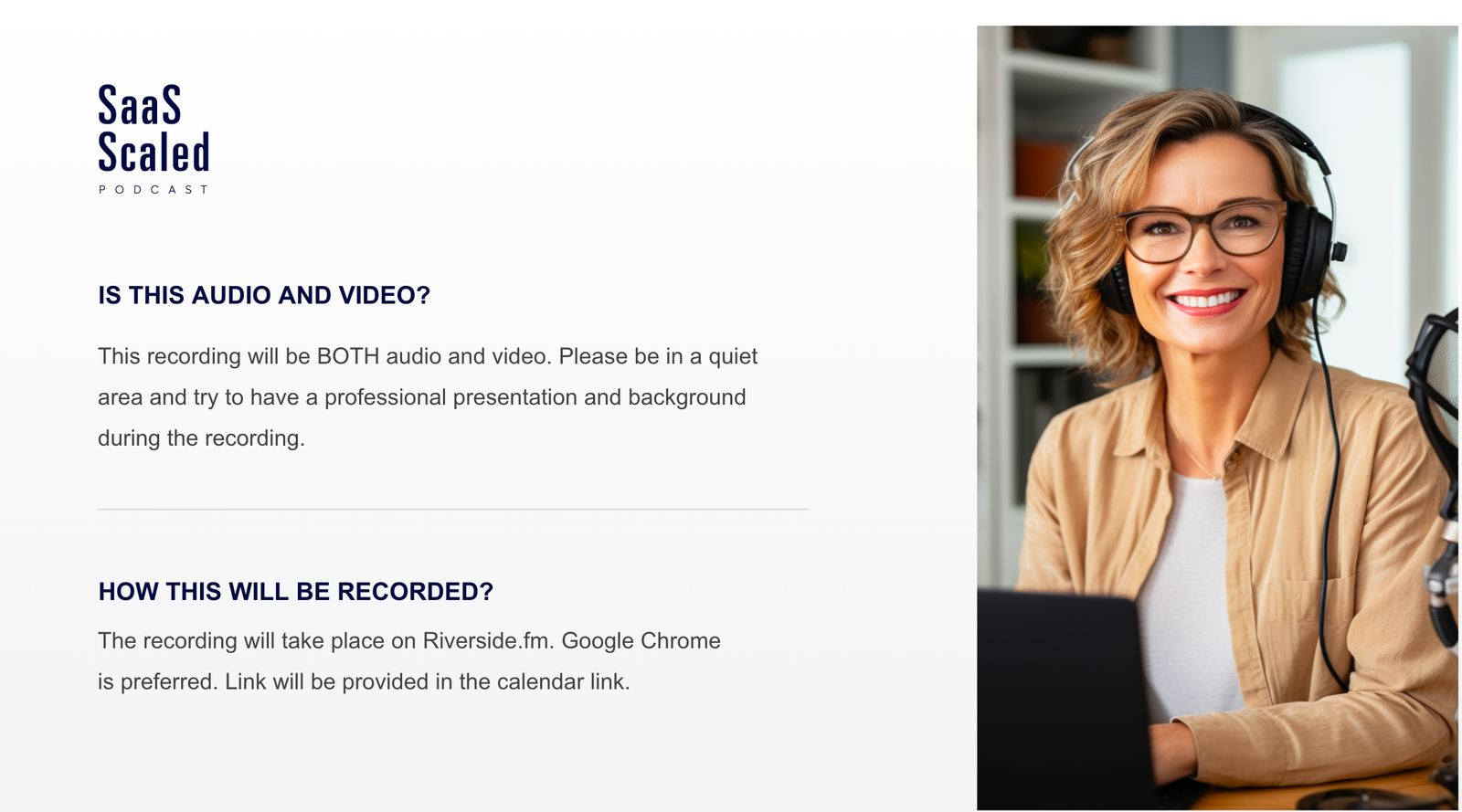
Intake. I built and programmed the guest intake form on the site; responses land in a shared Google Sheet the whole team works from. I also designed the guest prep document we send ahead of each recording, with the practical things that decide asset quality before anyone hits record: a quiet, well-lit room and a real microphone. Production quality starts before the interview.
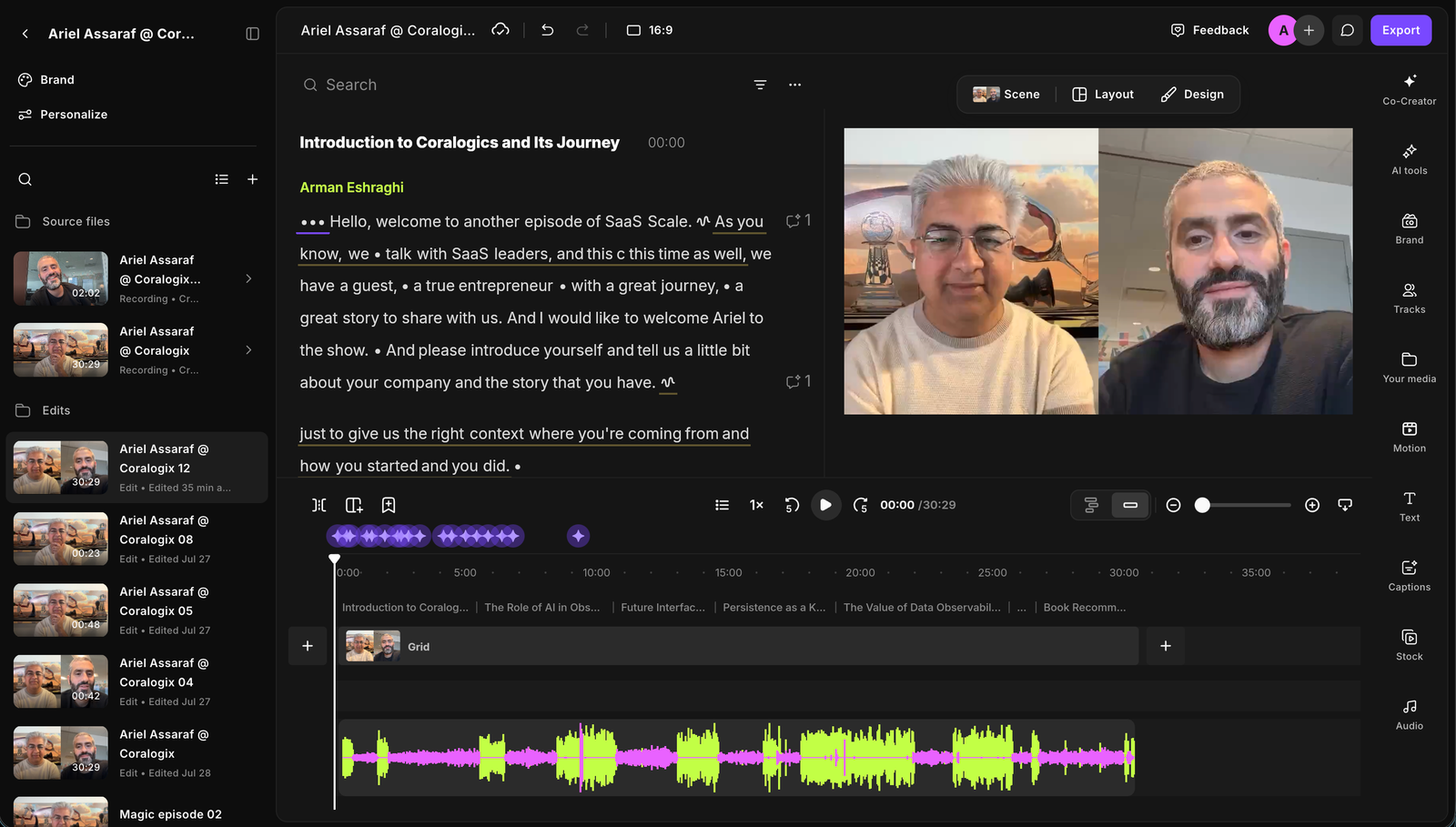
Edit. I pull the recording from Riverside and cut the main episode in Premiere Pro on a template I built, which is what keeps the turnaround fast at this cadence. Shorts and LinkedIn cuts are edited in Riverside.
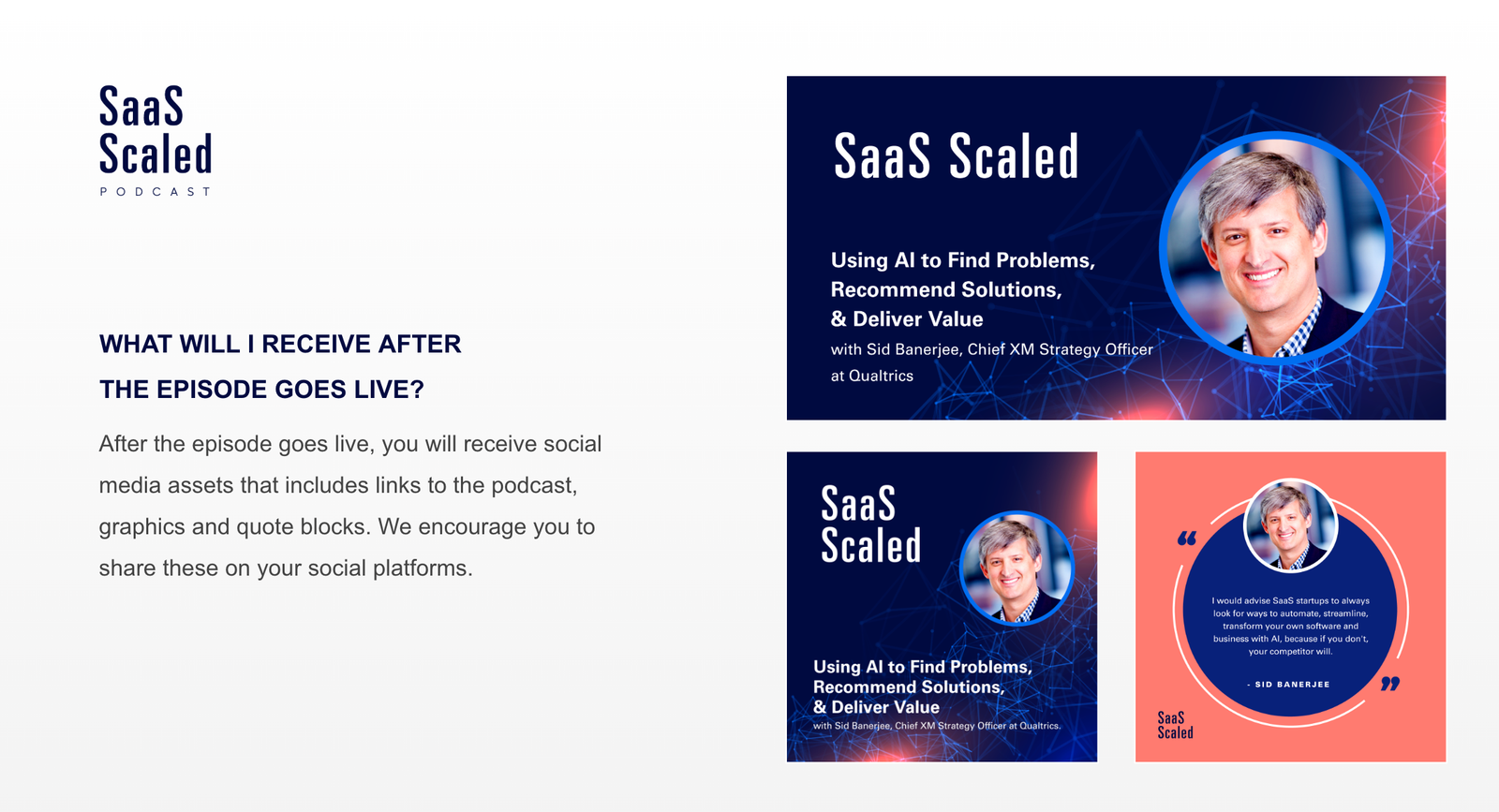
Assets. Working from Megan's notes, I produce the full promo kit for every episode.
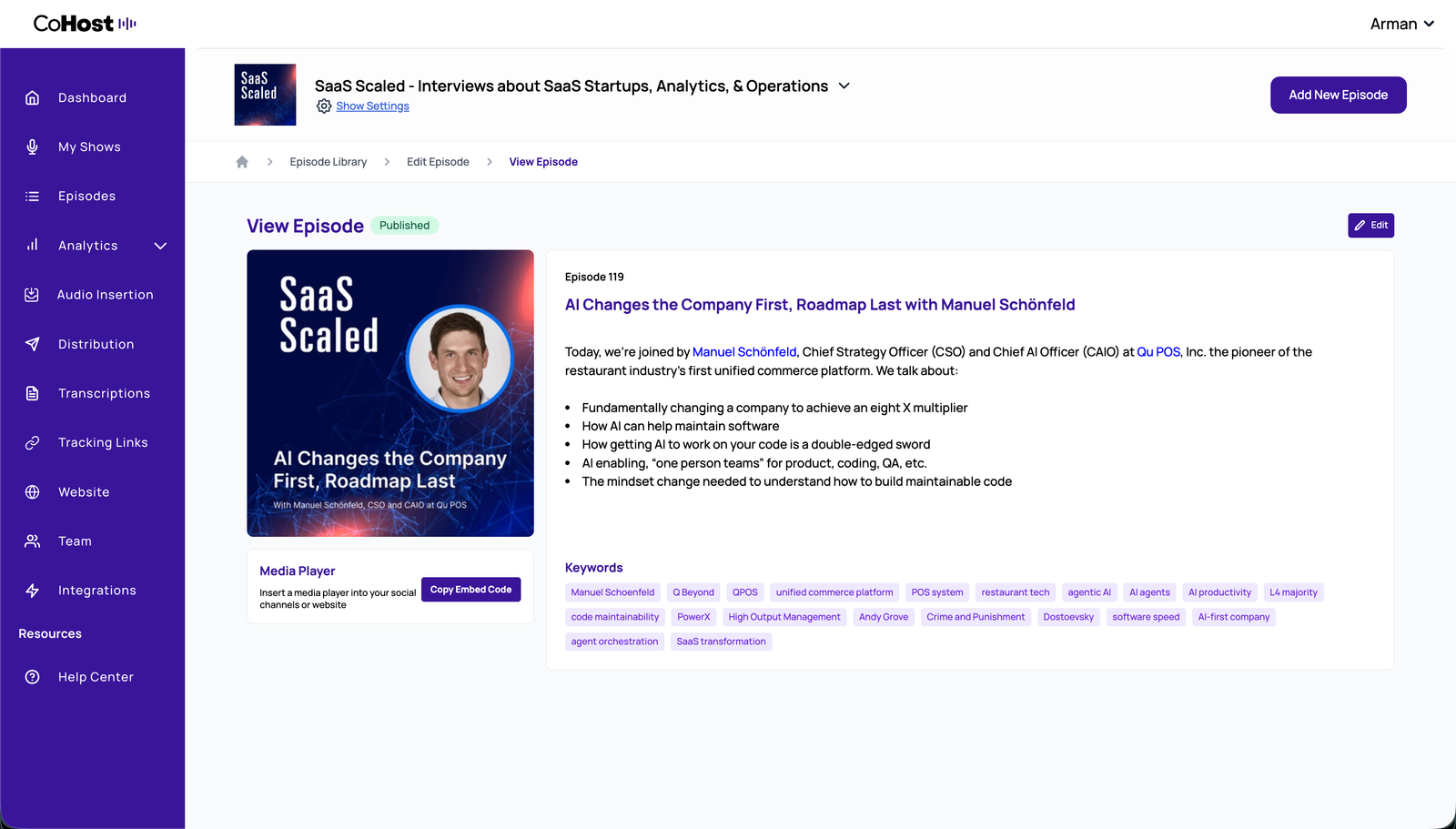
Distribution. I publish through Cohost out to every streaming platform, plus YouTube. The upload and deploy are mine.
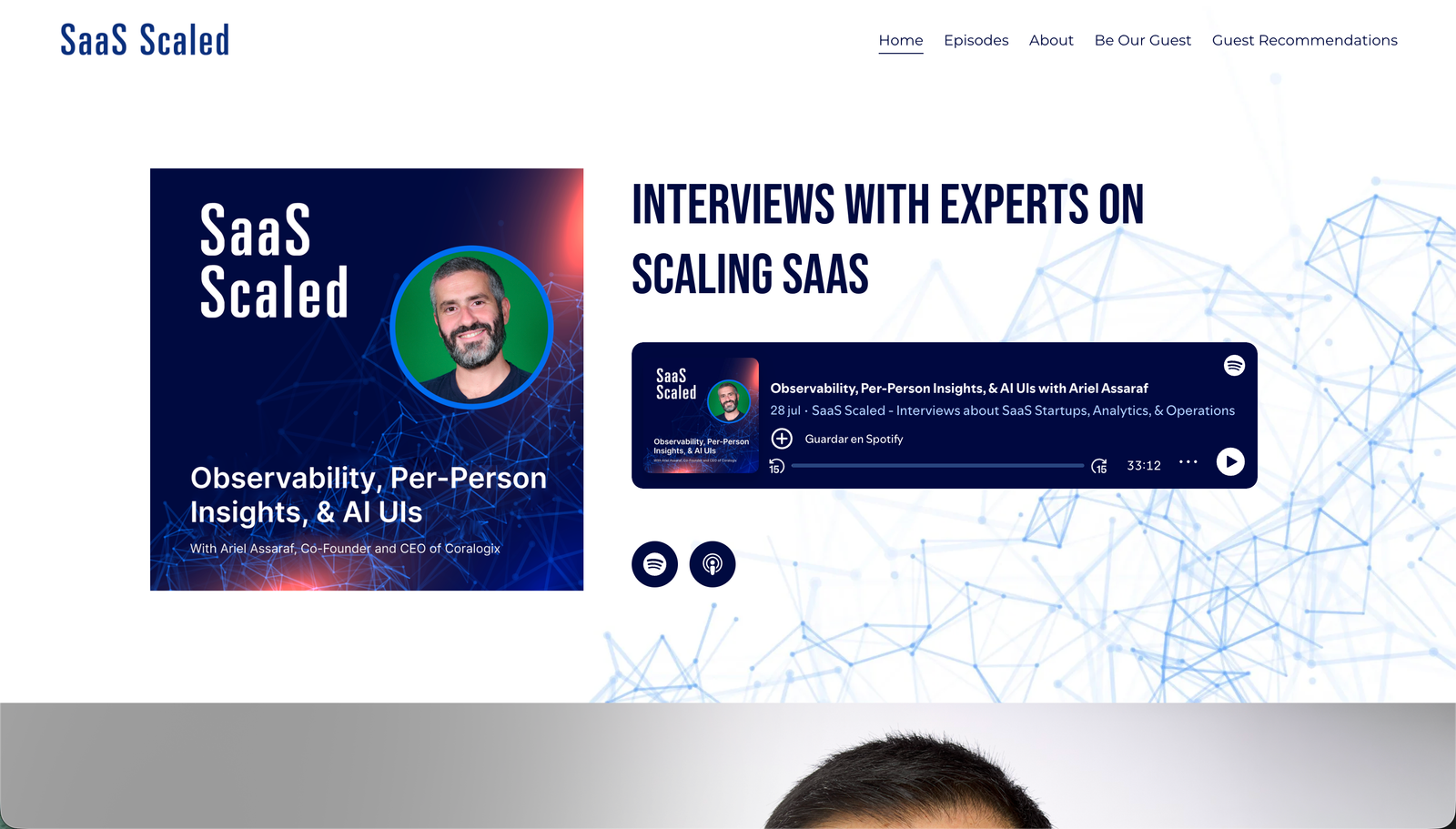
Web. I update the site with each new episode. That step has to wait until the episode is live on Spotify, because the Spotify embed is wired into several parts of the site, so I sequence it on purpose rather than by habit. Then I refresh the home and add the two things we collect from every guest, their recommended books and recommended cities, which feed dedicated pages and keep the site growing as a content asset in its own right.
None of this is improvised. The intake form, the prep doc, the Premiere template, and the brand templates are a system I built so the whole thing is repeatable, which is why I can take an episode from written content to a live, updated site in about four to six hours. The speed is a product of the system, not a shortcut around it.
03 — The Assets, Every Episode
Each episode ships a full promo kit, all of it made by me:
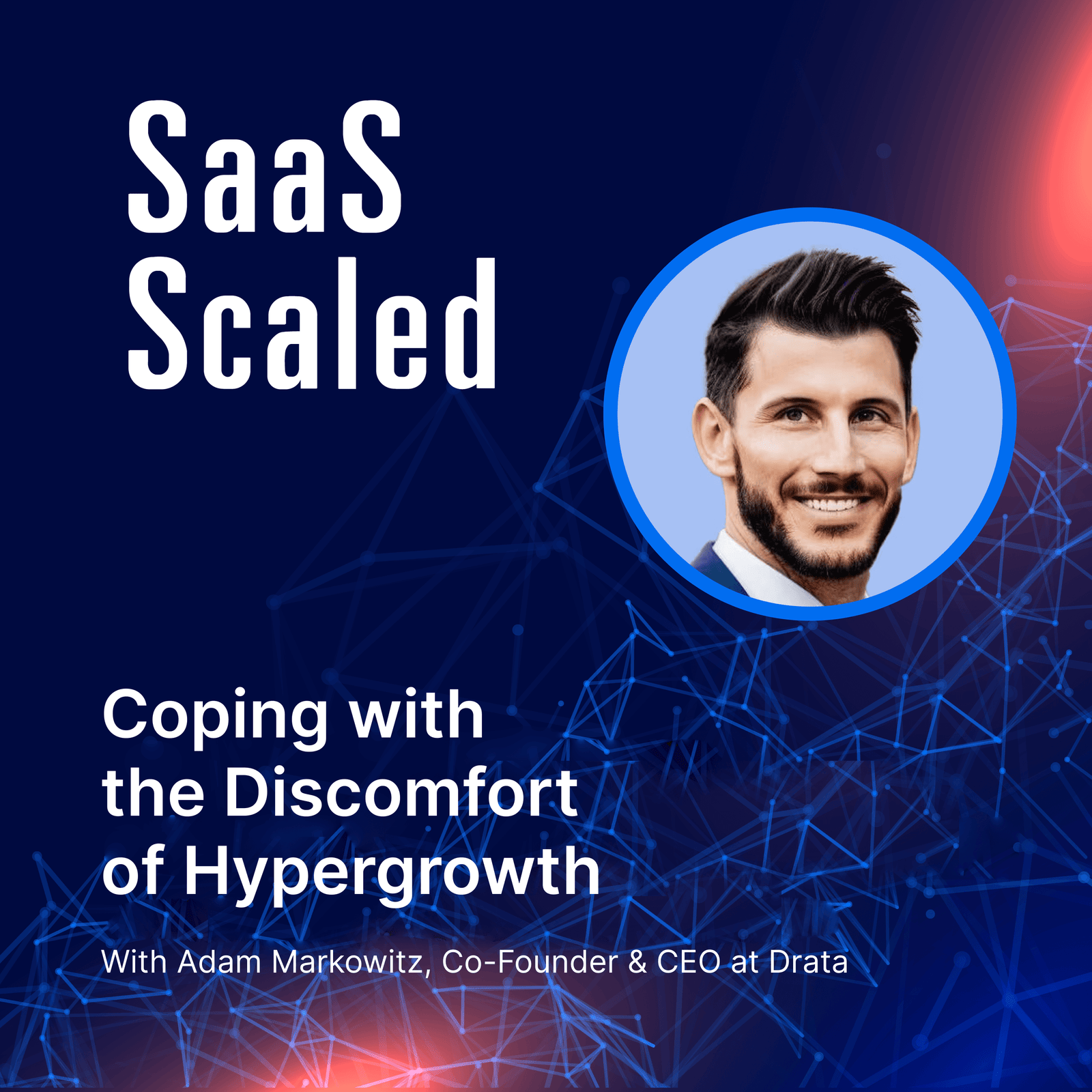
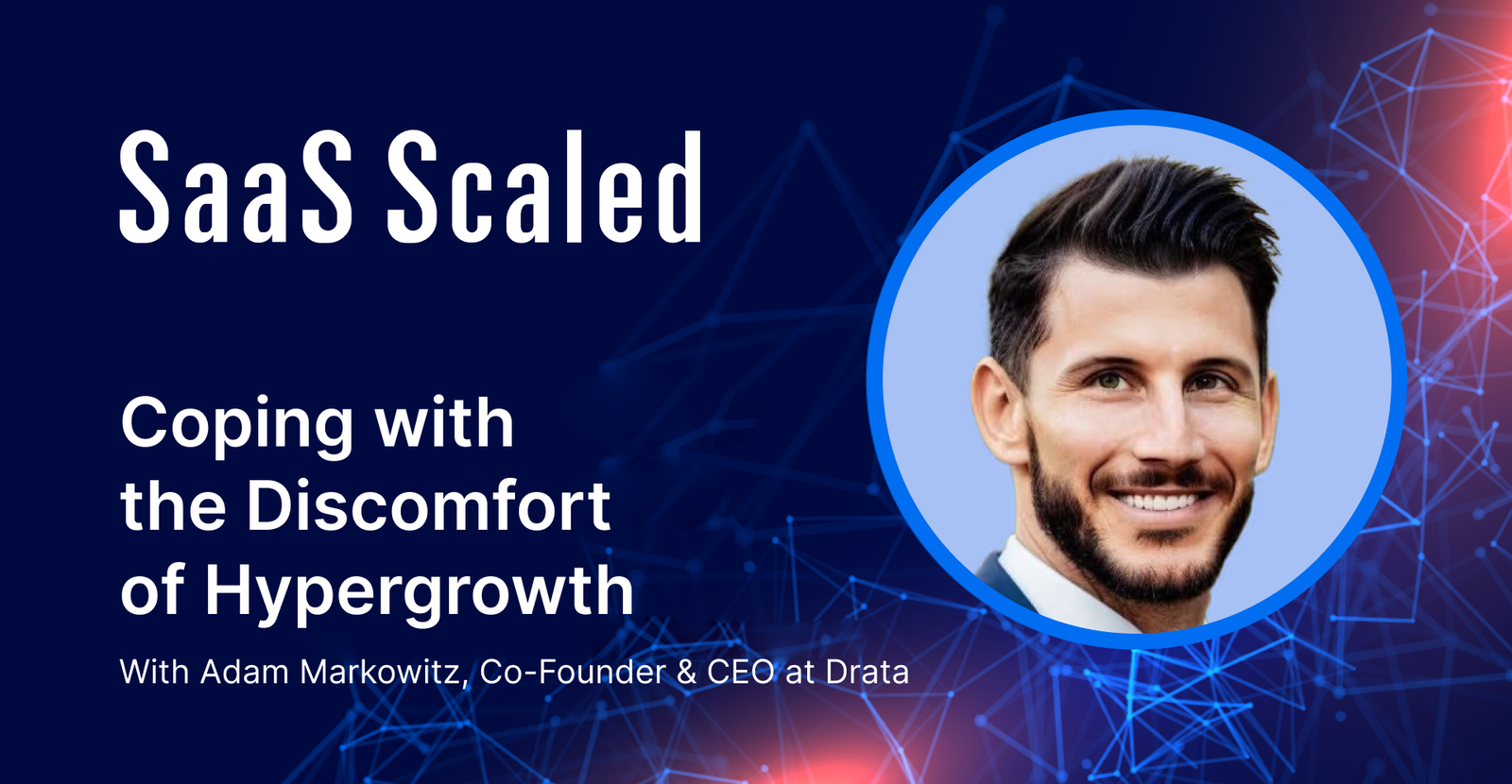
A video cover and a post cover
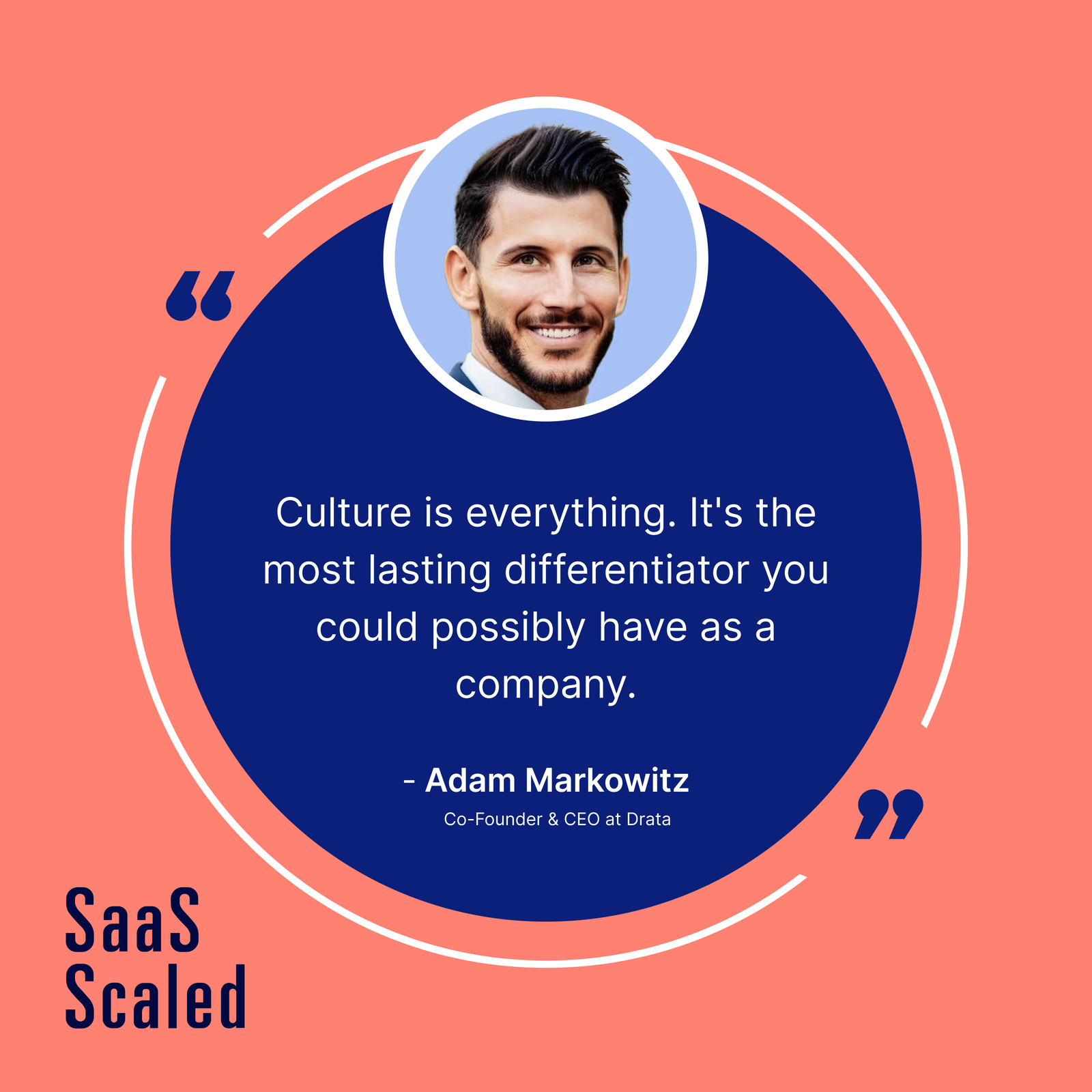
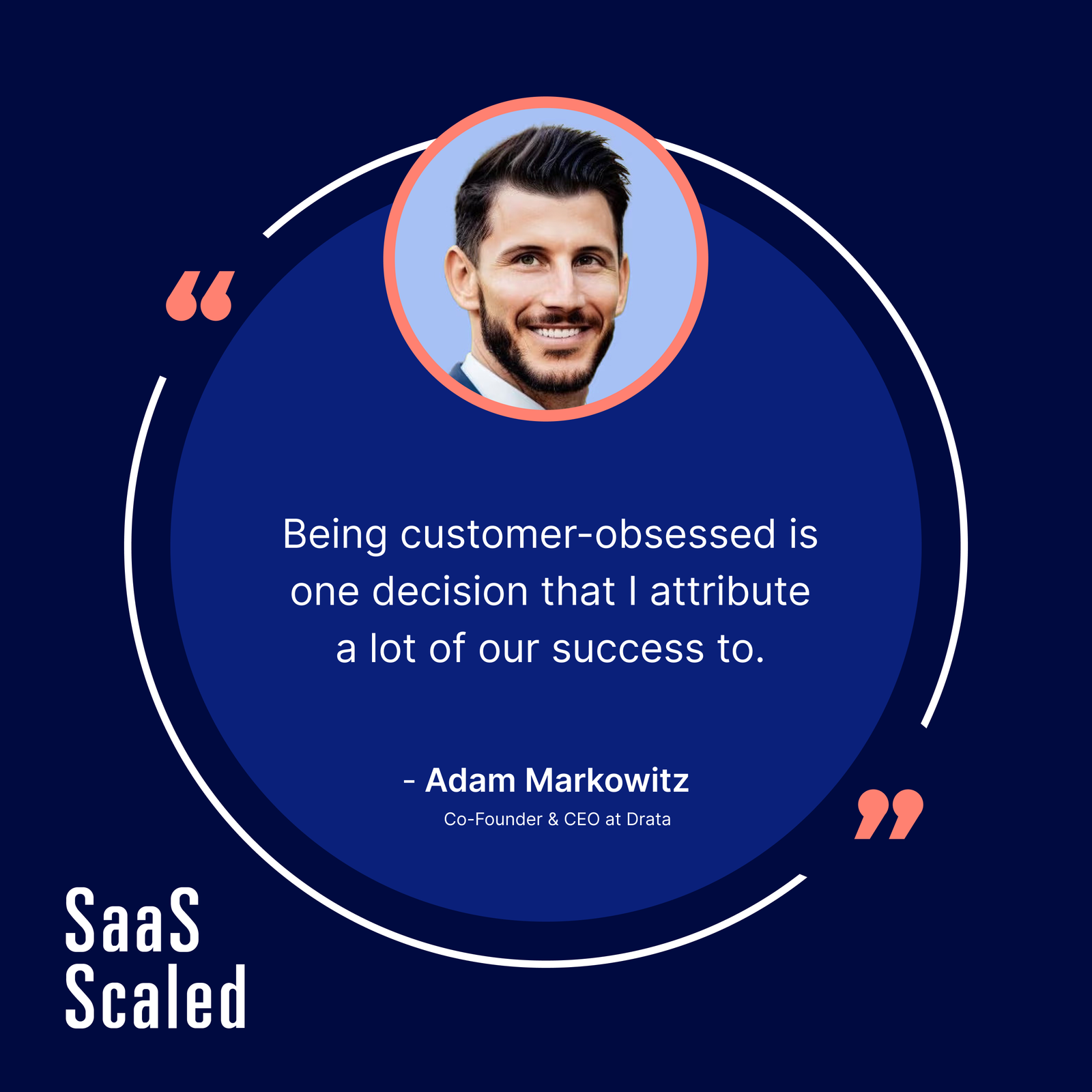
Two pull-quote graphics drawn from the interview
Audio and video assets formatted for Spotify, Apple Podcasts, and YouTube
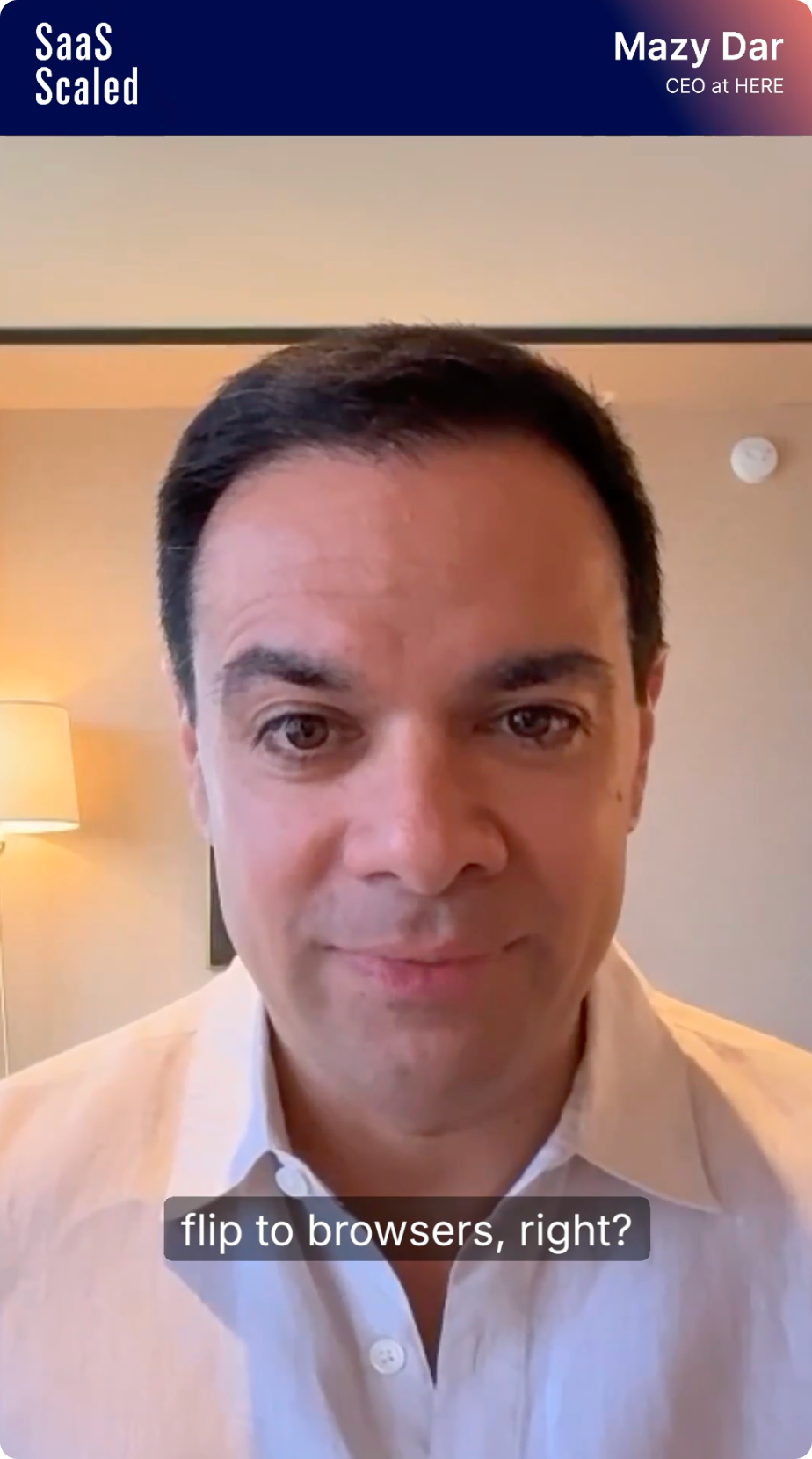
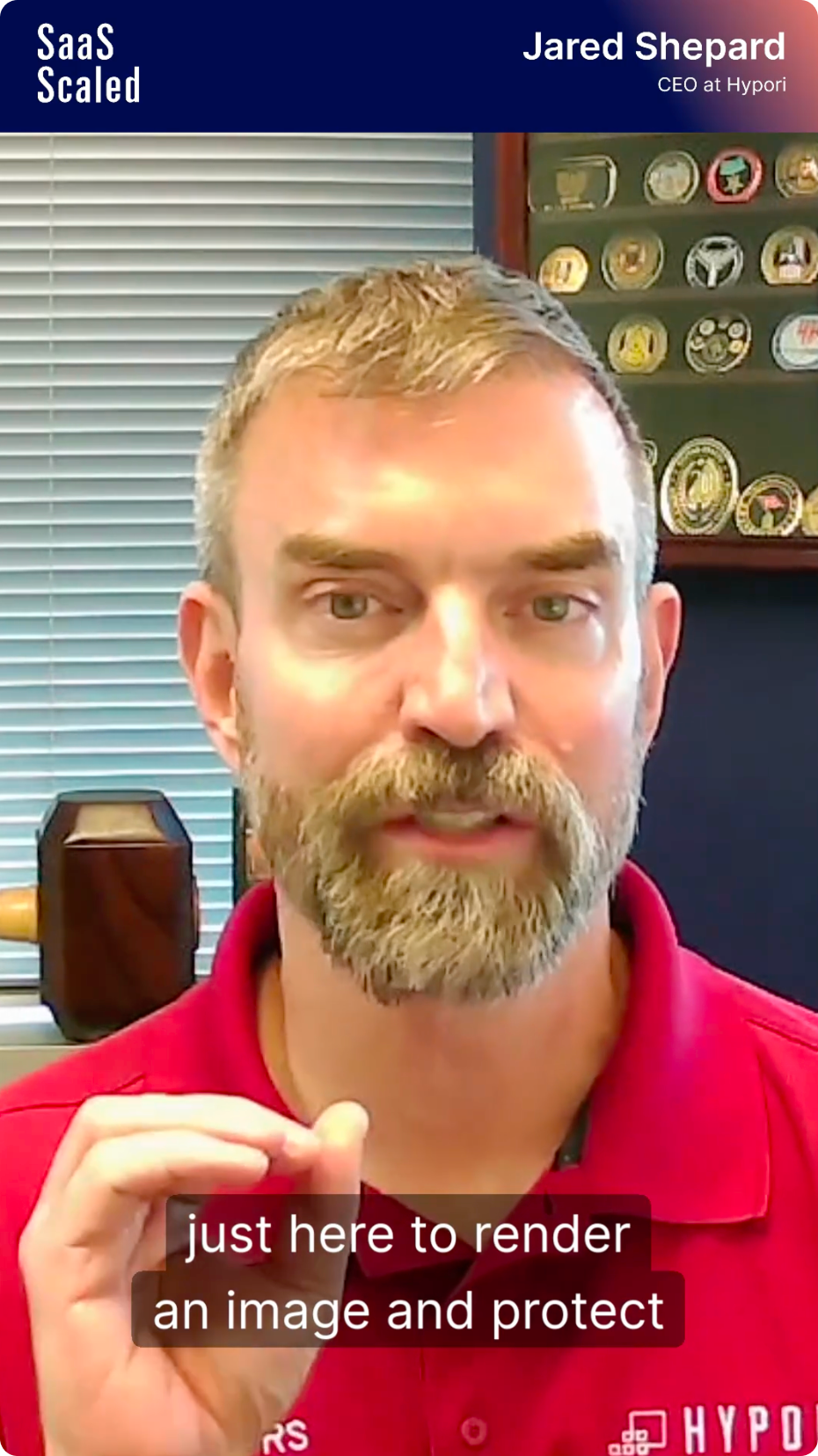
Short vertical cuts for LinkedIn and YouTube
Seven or more distinct pieces per episode, on brand, on schedule, every two weeks. Multiply that across 75 episodes and it's the output of a content team, produced by one person.
04 — I Own And Extend The Brand System
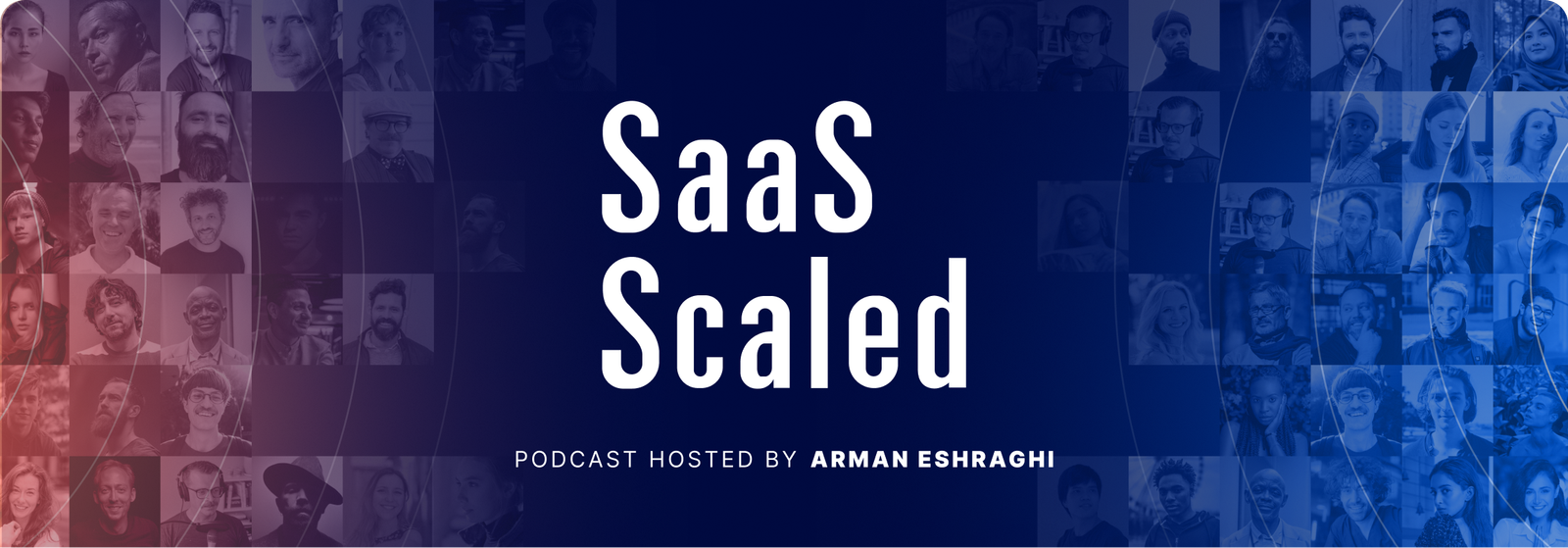
The logo and core identity were in place when I took over. Everything the brand has become since is the part I run. I took that starting point and built the system around it: the asset templates, the visual language for covers, quotes, and clips, and the way it all holds together across every platform. I maintain it and extend it whenever the show needs something new, which means the brand doesn't depend on anyone else to stay consistent or to grow. That's the difference between applying a brand and owning the system that keeps one alive.
05 — Reach And Consistency
Over three-plus years I've produced 75 episodes on a steady biweekly cadence. The show has reached roughly 7,800 downloads and 5,800 unique listeners, and about 69% of that audience is in the US, the exact market the podcast exists to build relationships in. On YouTube, the short vertical cuts I produce are the highest-performing format, driving around two-thirds of the channel's views, which is the one place the data ties a production choice of mine directly to a result.
My job is to make sure that whenever a guest does share an episode, what they're sharing is a polished product that shipped on time and on brand. Consistency is the number I actually own.
75
Episodes over 3+ years, biweekly
~7,800
Downloads to date, show all-time
69%
Of the audience is in the US
~12,700
YouTube views across the cuts I produce
06 — Motion, When The Moment Calls For It
I'll be straight about the craft here: most of the week-to-week editing is high-volume but standard work, cut, trim, assemble, ship. The exception, and the piece I'm proudest of, is the episode 100 celebration. For that one I made a full motion video in After Effects, built from existing footage and set to an AI voiceover. It's the moment the production stretched past routine into something genuinely designed, and it came out exactly as I wanted.
07 — Key Takeaways
→ Ownership beats output. The pipeline, the brand, the templates: I built the system, not just the deliverables inside it. That system is also what turns a full episode into about four to six hours of work instead of a multi-day scramble, every two weeks, for three-plus years.
→ Fit-for-purpose is a real strategy. The show's job is networking, not audience growth. Reporting modest, honest numbers instead of dressing them up, and being upfront that reach depends on the guest, not the production, is the judgment call that makes this a content product rather than a content habit.
In one line
A single person running what most companies staff as a content team, on brand and on schedule for years, is exactly the range a small company gets from one hire. That's what this project proves: not that I can edit video, but that I can own a content product end to end and keep it running.